

Incident Date: May 26, 2025
Aircraft: Boeing 787-9 Dreamliner
Registration: N26902
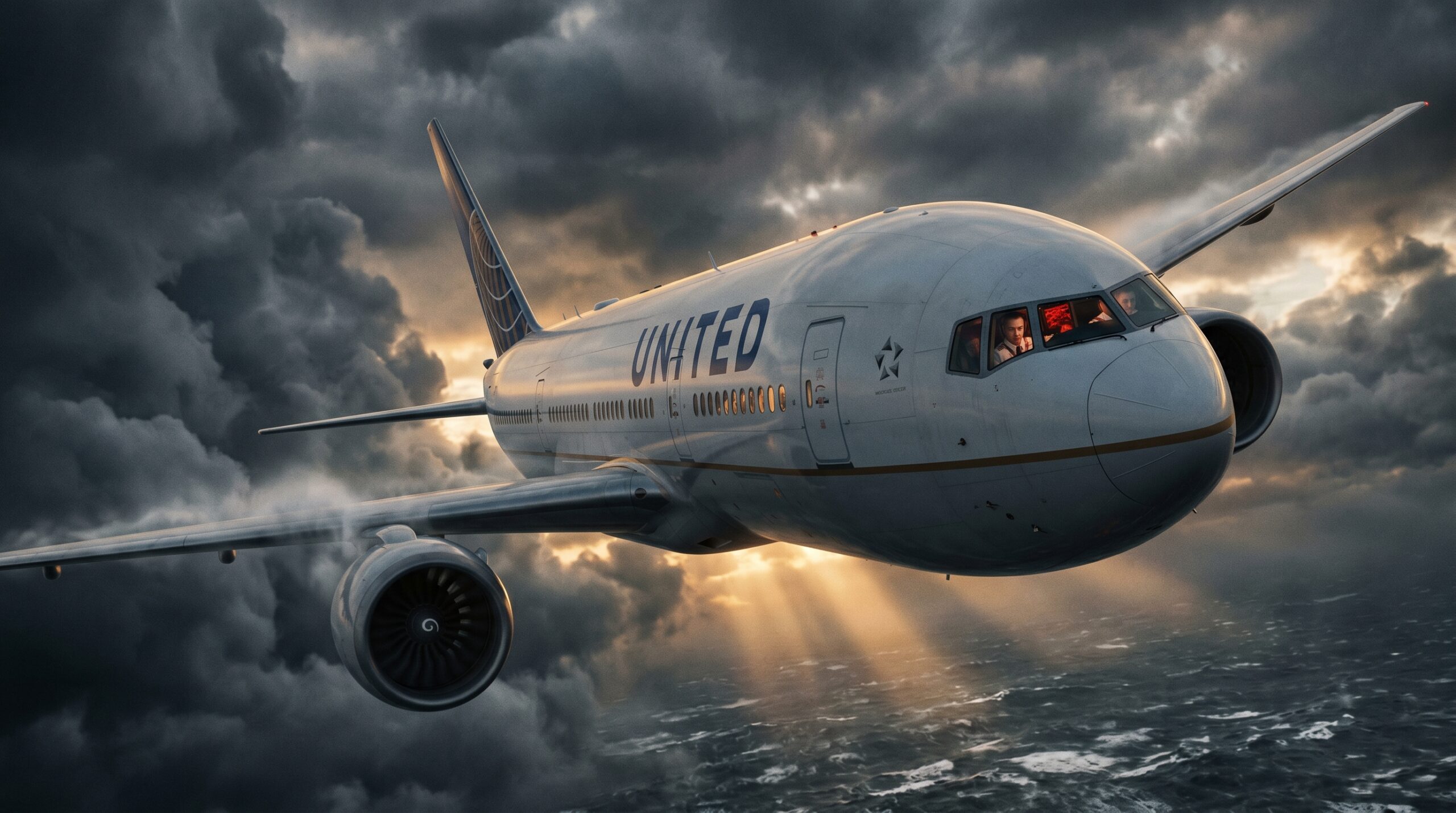
In an event that underscores the unpredictable nature of air travel,united airlines flight ua770 emergency diversion, en route from Barcelona (BCN) to Chicago (ORD), declared a general in-flight emergency on May 26, 2025. The flight, which was carrying 257 passengers and a crew of 12, was forced to make an unscheduled diversion to London Heathrow Airport (LHR) .
While the incident caused significant disruption and anxiety, the professionalism of the flight crew and the robustness of international aviation safety protocols ensured that the aircraft landed safely with no injuries reported.
The Trigger: A Pressurization Problem at 37,000 Feet
Approximately 90 minutes into the transatlantic journey, while cruising over the Atlantic Ocean, the flight crew detected a potential issue with the aircraft’s cabin pressurization system .
Cabin pressurization is critical for high-altitude flight, ensuring that oxygen levels remain breathable for everyone on board. A malfunction at 37,000 feet could lead to hypoxia (oxygen deprivation), making this a “time-critical” emergency. Upon detecting the anomaly, the pilots acted immediately, signaling distress using the international transponder code 7700 .
The Diversion: Why London Heathrow?
Once the emergency was declared, the flight crew coordinated with air traffic control to change course. The decision to divert to London Heathrow was strategic. While the flight was roughly midway across the Atlantic, specific operational factors made London the safest choice:
-
Proximity & Time: Heathrow was the nearest suitable airport equipped to handle a Boeing 787-9.
-
Infrastructure: LHR has Category III instrument landing systems and long runways capable of handling heavy, long-haul aircraft.
-
Support: The airport has extensive emergency response teams and United Airlines maintenance facilities .
The aircraft was swiftly cleared for priority landing, avoiding standard holding patterns to get on the ground as quickly as possible.
The Landing and Immediate Aftermath
Flight UA770 touched down safely on Runway 27R at Heathrow at approximately 4:55 PM BST . Emergency vehicles were on standby as a precaution, but they were not needed. The plane taxied to Gate B44 .
Upon disembarkation, passengers noted that the crew remained calm, and interestingly, oxygen masks were not deployed. This detail suggests that while the pressurization system triggered an alert, the cabin environment itself remained stable, and the pilots chose to descend to a safer altitude rather than risk a full system failure .
| Aspect | Details |
|---|---|
| Flight Number | United Airlines UA770 |
| Route | Barcelona (BCN) → Chicago (ORD) |
| Date of Incident | May 26, 2025 |
| Aircraft Type | Boeing 787-9 Dreamliner |
| Emergency Code | 7700 (General Emergency) |
| Cause | Cabin Pressurization Issue / Anomaly |
| Diversion Airport | London Heathrow (LHR), Terminal B, Gate B44 |
| Landing Time | 16:55 BST |
| Injuries | 0 (None reported) |
| Passenger/Crew Count | 257 Passengers, 12 Crew |
Passenger Experience and Airline Response
For the passengers, the incident turned a routine flight into a logistical challenge. Upon landing at Heathrow, the aircraft was taken out of service for inspection by maintenance crews. United Airlines activated its irregular operations plan (IROP), which included:
-
Accommodations: Providing hotel accommodations for those who required overnight stays.
-
Vouchers: Issuing meal vouchers for passengers waiting at the airport.
-
Rebooking: Transferring passengers to alternate flights from London to Chicago, either later that evening or the following day .
A Look at Recent Aviation Incidents
The UA770 diversion occurred during a period of heightened public awareness regarding aviation safety. While flying remains statistically the safest mode of transport, mechanical issues do occur. For context, here is a comparison of this incident with another major United Airlines event in the same year:
| Incident | Flight UA770 (May 2025) | UA Tokyo Flight (Dec 2025) |
|---|---|---|
| Issue | Cabin Pressurization (detected mid-cruise) | Engine Failure (immediately after takeoff) |
| Aircraft | Boeing 787-9 Dreamliner | Boeing 777-200 |
| Action | Diverted to London (Alternate airport) | Returned to Departure airport (U-turn) |
| Outcome | Safe landing; passengers rebooked | Safe landing; brush fire on ground extinguished |
Conclusion
The emergency diversion of United Airlines Flight UA770 serves as a textbook case of “aviation safety redundancy.” While the mechanical anomaly was undoubtedly alarming, the outcome was a triumph of training and technology.
The incident highlights that modern aviation is not defined by the absence of problems, but by the ability to handle them without loss of life. The pilots’ decision to squawk 7700 and divert to London rather than risk the longer journey to Chicago prioritized safety over schedule. For passengers, the inconvenience of a night in London is a small price to pay for the assurance that commercial flying remains an intensely monitored and exceptionally safe activity.
FAQs:
1. What specifically went wrong on United flight UA770?
Pilots reported a cabin pressurization anomaly. While the specific failed component was not immediately disclosed, the system indicated a potential inability to maintain safe oxygen levels at cruising altitude, prompting an immediate descent and diversion .
2. Why did the plane divert to London instead of returning to Barcelona?
At the time the emergency was declared, the aircraft was roughly halfway across the Atlantic. London was the nearest suitable diversion point. Flying back to Spain would have required more flight time over water than proceeding to the UK .
3. Is the 7700 emergency code dangerous?
The Squawk 7700 code is a general emergency signal. It does not always mean the plane is crashing; it means the pilot has declared a situation where they need priority handling from air traffic control. In this case, it allowed UA770 to skip the landing queue at Heathrow .
4. Were the passengers in danger?
Once the issue was detected, the pilots descended to a lower altitude where supplemental oxygen is not required. This standard procedure removes the immediate risk. The aircraft landed safely without injuries, indicating that the danger was mitigated as soon as the problem was identified .
5. Did the Boeing 787-9 have a known history of this issue?
The Boeing 787 Dreamliner has had previous incidents related to its environmental control systems (ECS) in the past decade. However, manufacturers and airlines have since implemented numerous software and hardware updates. This specific incident is currently listed as an isolated event .