
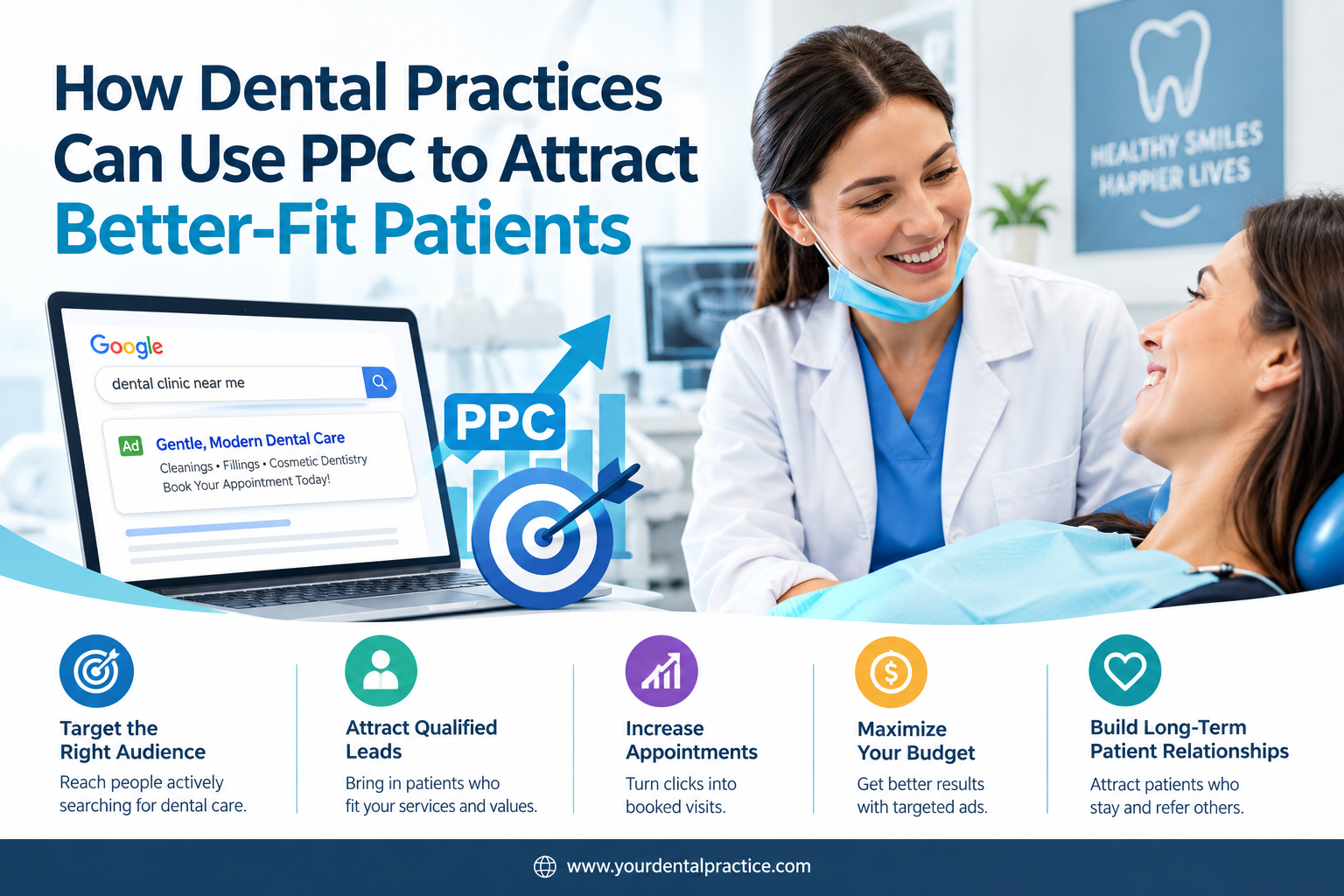

Paid search can help a dental practice appear when people are actively looking for treatment, but visibility alone is not the objective. A campaign is useful only when it brings enquiries that fit the services, location and appointment capacity of the practice. That requires a clear structure, reliable tracking and landing pages that answer the questions a prospective patient is likely to have before making contact.
Organise Campaigns Around Real Services
Dental practices often offer a wide mix of services, from routine care to more specialised treatments. Those services can attract different audiences, have different appointment journeys and require different information. Putting every search into one broad campaign makes it difficult to understand what is working.
A more useful structure groups campaigns around priority treatments and the locations the practice genuinely serves. That makes ad copy more relevant and allows budget to be directed toward the services the team wants to grow.
Separate Research Searches From Booking Intent
Someone asking a general question about a treatment is not at the same stage as someone looking for a nearby practice and an appointment. Paid search performs better when those stages are treated differently. High-intent searches should lead to focused pages with clear next steps, while educational questions can be answered through informative content.
Search-term reviews help refine this distinction over time. They reveal which phrases are creating useful enquiries and which themes are consuming budget without matching the practice’s goals.
Make Local Relevance Clear
Location is central to most dental decisions. A prospective patient should be able to tell quickly where the practice is, which areas it serves and how to reach it. Campaign location settings should reflect realistic catchment areas rather than simply targeting the widest possible radius.
Landing pages can support that local relevance with practical information such as address details, travel guidance where appropriate, opening information and clear contact options. The objective is to remove uncertainty, not to repeat location names unnaturally.
Create Treatment Pages That Help People Decide
A paid visitor should not have to search the website for basic information. A treatment page should explain what the service is, who the practice is trying to help, what the next step involves and how someone can ask a question or request an appointment. Claims should be clear and responsible rather than exaggerated.
Mobile experience matters as well. Forms should be usable on a phone, contact options should be obvious and the page should load reliably. Small usability problems can reduce the value of otherwise relevant traffic.
Measure Enquiries Beyond the Click
Clicks and impressions show activity, but they do not show whether the campaign is helping the practice grow. Calls, forms, booking requests and other meaningful actions need consistent tracking. The team should also review whether those enquiries were appropriate for the promoted service.
This lead-quality feedback helps identify a common problem: a campaign may appear efficient inside the advertising platform while still producing enquiries that are unsuitable, outside the service area or unrelated to the treatment being promoted.
Use Budget Where the Practice Has Capacity
Marketing and operations need to be aligned. If a practice has limited availability for a particular treatment, increasing spend without considering capacity can create a poor experience for both staff and patients. Budget decisions should reflect demand, commercial priorities and the ability to respond to enquiries promptly.
Changes should also be tested in a controlled way. When keywords, bids, landing pages and targeting are all altered at once, it becomes much harder to identify what caused the result.
Assess PPC Support by Transparency
Practices considering PPC for dental practices should ask how search terms, location targeting, conversion tracking and landing pages will be managed together. The strongest answers explain a process rather than promising a particular volume of patients.
A provider such as Optisearch may be useful when the practice wants specialist support with account structure, reporting and ongoing optimisation. Clear ownership matters: the practice should know who manages the account, what is being tested and which outcomes will be reviewed.
Build a Review Routine
A practical PPC routine combines frequent checks for obvious waste with deeper reviews of lead quality, service demand and budget allocation. Over time, the account should become more focused because each round of data shows which searches, pages and locations deserve more attention.
For a dental practice, successful PPC is not about chasing the largest number of clicks. It is about connecting the right prospective patients with the right services, making the next step easy and using real enquiry data to improve the system continuously.