
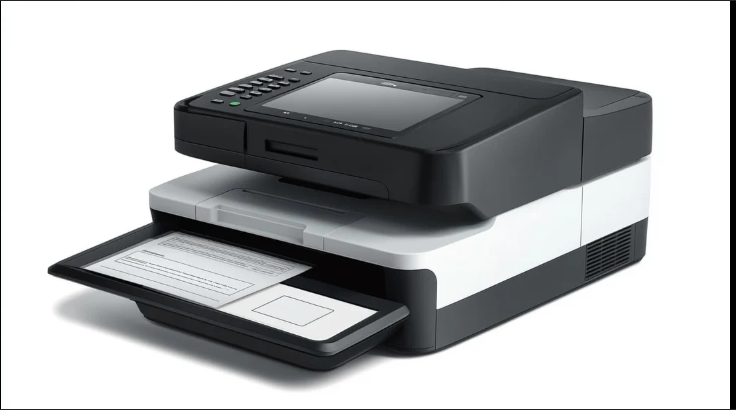

Modern businesses process enormous volumes of information every day, and efficient document management has become essential for maintaining productivity, accuracy, and workflow consistency. From healthcare and legal offices to financial institutions, education systems, and government agencies, organizations rely on fast and dependable scanning technology to digitize paperwork, improve accessibility, and streamline operations. As document workflows become increasingly digital, the demand for reliable high-speed scanning solutions continues to grow.
One of the most important innovations supporting these workflows is the high speed scanner automatic document feeder. Automatic document feeder technology allows users to process large batches of paperwork continuously without manually loading each page one at a time. This significantly improves efficiency while reducing repetitive tasks and minimizing interruptions during high-volume scanning operations.
Organizations handling mixed document types require more than just scanning speed. They need systems engineered for reliability, precise feeding control, and jam prevention to maintain productivity throughout long scanning sessions. Downtime caused by paper jams, double-feeds, skewed pages, or misaligned documents can slow operations and increase the risk of incomplete or inaccurate records. Advanced document feeder systems help eliminate these issues by integrating intelligent sensors, alignment controls, and feeding mechanisms designed for continuous throughput.
Today’s high-speed scanners are built to support demanding workflows involving invoices, contracts, receipts, medical records, legal forms, identification documents, and mixed media sizes. Whether processing hundreds or thousands of pages daily, businesses benefit from scanning systems capable of maintaining speed and accuracy without sacrificing reliability.
Efficient workstation design also contributes to productivity in document-intensive environments. Professionals working long hours at scanning stations or data entry workspaces often prioritize ergonomic equipment that supports comfort and efficiency throughout the workday. Many organizations pair high-performance scanning systems with accessories such as an ergonomic mechanical keyboard to help reduce strain and improve workflow comfort during repetitive computer-based tasks.
Advanced Feeding Mechanisms That Maintain Alignment And Prevent Double-Feeds
One of the biggest challenges in high-volume scanning environments is maintaining consistent paper handling across different document types and sizes. Documents may vary in thickness, texture, condition, or dimensions, making reliable feeding technology essential for uninterrupted workflow performance.
Advanced automatic document feeder systems are specifically engineered to maintain alignment and minimize the risk of feeding errors during continuous scanning operations. Precision rollers, intelligent paper guides, and controlled feeding mechanisms work together to ensure documents move smoothly through the scanner while maintaining proper positioning.
Double-feed prevention technology is especially important when scanning sensitive or high-priority records. In fast-moving workflows, two sheets sticking together can lead to missed pages, incomplete files, or data loss. Modern scanners use ultrasonic sensors and intelligent feeding detection systems to identify overlapping pages instantly, allowing operators to correct issues before documents are skipped or improperly processed.
Alignment control also plays a major role in maintaining image quality and OCR accuracy. Skewed pages can affect text recognition, crop important information, and reduce the reliability of automated indexing systems. Advanced feeding systems continuously monitor document positioning and automatically adjust alignment during scanning to maintain clean, accurate digital files.
Mixed batch scanning has become increasingly common across industries where employees handle documents of varying sizes and materials within the same workflow. High-performance document feeders are designed to accommodate standard paper, receipts, business cards, identification cards, thin documents, and thicker media without requiring constant manual adjustments.
Reliability is especially important in environments where downtime directly impacts productivity. Legal firms processing case files, healthcare providers digitizing patient records, and financial institutions managing transaction documents all rely on scanning systems capable of maintaining high throughput with minimal interruptions.
Workspace flexibility also contributes to operational efficiency. In mobile offices, shared workstations, or hybrid work environments, compact accessories such as a portable mechanical keyboard help professionals maintain productivity while supporting comfortable and adaptable workstation setups alongside high-performance scanning equipment.
Precision Sensors That Detect Skew, Thickness Changes, And Mixed Media
Modern scanning systems rely heavily on intelligent sensor technology to ensure consistent document handling and image accuracy. Precision sensors play a critical role in detecting issues before they interrupt workflows or compromise scan quality.
Skew detection sensors help identify when a document enters the scanner at an angle. Even slight misalignment can impact OCR performance, crop document edges, or create image distortions that reduce readability. Advanced scanners automatically correct skew in real time, helping maintain accurate digital files without requiring manual intervention.
Thickness detection is another important capability in environments processing mixed media. Documents such as receipts, identification cards, envelopes, multi-page forms, and laminated materials vary significantly in thickness. Intelligent sensors monitor these changes continuously to adjust feeding pressure and maintain smooth document transport throughout the scanning process.
Mixed media detection improves efficiency by allowing users to scan different document types together within a single batch. Rather than separating items manually, intelligent feeding systems adapt automatically to variations in paper weight, size, and texture. This flexibility helps organizations save time while improving operational efficiency in high-volume workflows.
Advanced sensors also contribute to jam prevention by monitoring paper movement throughout the feeder path. If resistance, overlap, or abnormal feeding conditions are detected, the scanner can pause automatically before a jam occurs. This proactive approach reduces interruptions and helps protect both documents and hardware from damage.
Image quality optimization is another major benefit of intelligent scanning systems. Precision sensors work alongside software algorithms to improve clarity, remove blank pages, enhance text visibility, and optimize OCR performance for searchable digital records. These capabilities are especially valuable in industries managing large document archives or compliance-sensitive records.
As businesses continue transitioning toward digital workflows, dependable scanning technology remains essential for maintaining speed, accuracy, and operational consistency. High-speed scanners with advanced automatic document feeders help organizations reduce manual handling, improve document accessibility, and process information more efficiently across a wide range of industries.
Ultimately, modern document scanning systems are designed not only for speed but also for reliability and intelligent automation. Through advanced feeding mechanisms, precision alignment controls, and intelligent sensor technology, high-speed scanners help organizations maintain continuous, jam-free throughput while improving the accuracy and efficiency of digital document management workflows.